
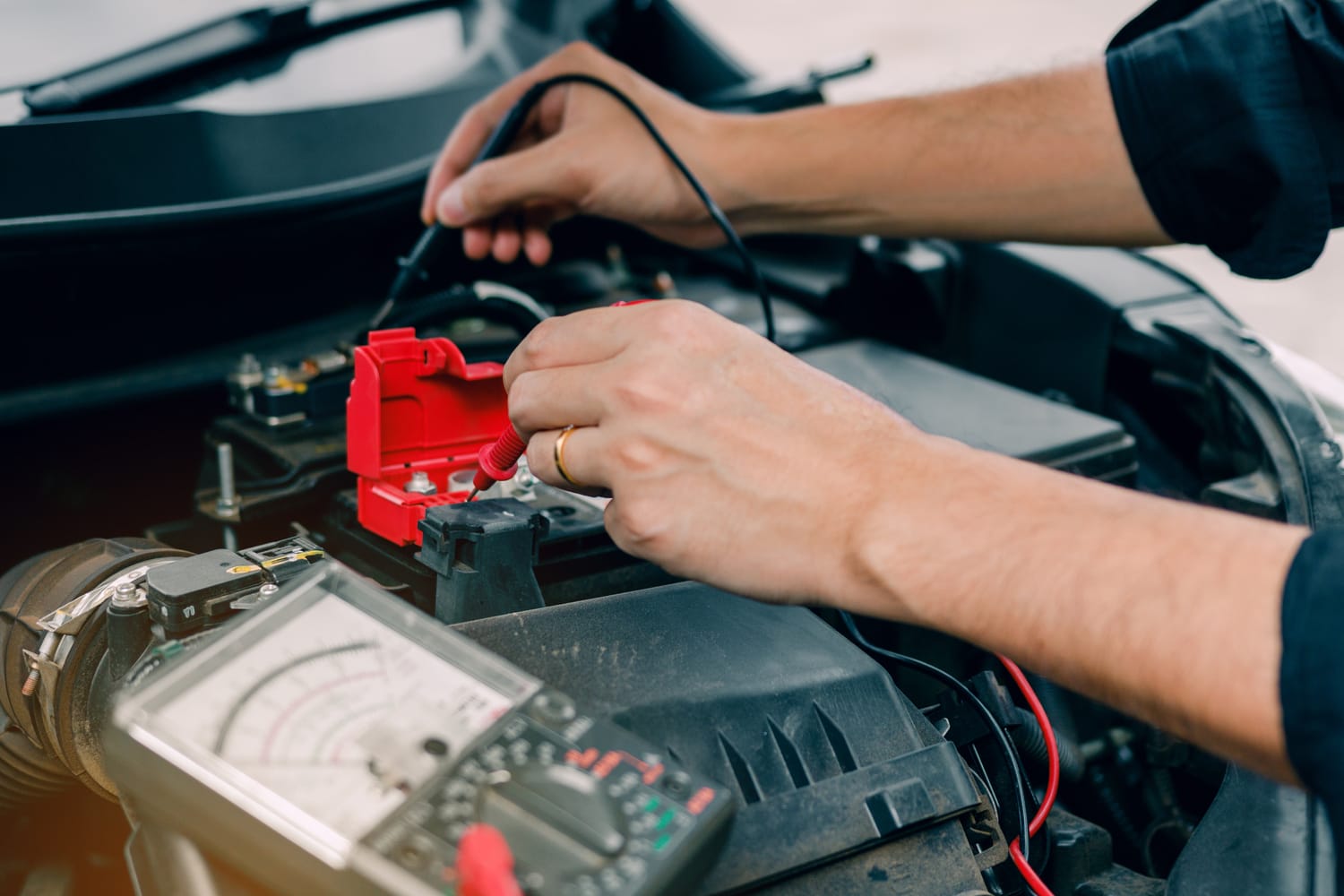
A battery warning light does not automatically mean the battery needs replacing. When the light stays on while the engine is running, the problem may sit elsewhere in the charging system, including the alternator, drive belt, wiring or electrical connections.
Testing the system before fitting another battery helps identify what is actually preventing it from charging correctly.
The Warning Light Is About Charging, Not Just the Battery
The battery symbol can appear when the vehicle detects a problem maintaining the electrical supply while the engine is running.
The battery helps start the vehicle and supports its electrical systems, but the alternator replenishes the charge once the engine is running.
If charging drops outside the expected range, the warning light may appear even when the battery itself is still serviceable.
This is why the dashboard symbol should be treated as a sign to investigate the charging system rather than as an automatic diagnosis.
The Alternator May Be the Real Problem
A failing alternator can leave the battery without enough charge, even when the battery is in reasonable condition.
The vehicle may continue running for a period using the electricity already stored in the battery. Once that reserve falls, other electrical functions can begin to behave differently, and the car may eventually be difficult to restart.
An alternator fault can therefore create symptoms that look very similar to a weak battery.
Checking the charging output helps separate the two.
A Drive Belt Can Affect Charging Too
The alternator depends on the engine’s drive system to operate correctly.
If the relevant belt is damaged, loose or no longer driving the alternator as intended, charging performance can be affected. The battery warning light may then appear even though neither the battery nor the alternator itself is necessarily the original cause.
This is why diagnosis should consider the complete charging system rather than focusing on one component.
Wiring and Connections Can Interrupt the System
Poor electrical connections can affect the movement of power between the alternator, battery and the rest of the vehicle.
Loose, damaged or deteriorated wiring can create charging problems that are not solved by fitting a new battery. Connections around the battery and charging circuit may also need to be inspected and tested.
A visual check alone may not reveal every fault. Electrical testing helps determine whether power is reaching the correct places under operating conditions.
The Battery Can Still Be Part of the Problem
A warning light should not rule the battery out either.
An ageing or damaged battery may struggle to accept or retain charge. In some situations, there may also be more than one issue present, such as a weakened battery combined with a charging fault.
The useful question is not whether the battery could be faulty. It is whether testing confirms that the part needs attention.
That distinction helps avoid replacing components based only on the dashboard warning.
Other Changes Can Provide Useful Clues
The way the vehicle behaves when the warning appears can give an auto electrician more context.
Headlights may become noticeably dimmer. Electrical accessories may begin responding differently. Starting may become harder after the vehicle has been switched off.
The warning may also appear intermittently before becoming more consistent.
These observations do not identify the failed part by themselves, but they can help direct testing towards the charging and power supply systems.
A New Battery Can Go Flat If the Underlying Fault Remains
Replacing a flat battery will not fix a fault elsewhere in the charging system.
A new battery may get the car started normally again at first because it already has a charge. But if the alternator or another charging component is not topping it back up, that battery can slowly go flat as well.
This is one reason repeated flat batteries deserve further investigation rather than another automatic replacement.
For drivers looking for mobile car battery replacement in Melbourne, checking the charging system at the same time can help establish whether replacement is actually required.
Testing Helps Separate Similar Symptoms
Battery and charging faults can produce similar behaviour, so proper electrical testing matters.
An auto electrician can assess the battery’s condition and check whether the alternator is charging correctly. Wiring, connections, and related components can then be investigated if the readings do not clearly point to a single cause.
This approach keeps the repair based on what the vehicle is doing rather than what the warning-light symbol appears to suggest.
Do Not Ignore a Battery Light That Stays On
A battery warning light that remains illuminated while driving warrants attention, as the vehicle may not be receiving the electrical supply it needs.
Continuing to drive without knowing whether the charging system is functioning properly can eventually leave the battery so depleted that the vehicle cannot restart.
The safest approach is to have the cause checked rather than waiting for another symptom to confirm that something is wrong.
Check the Cause Before Replacing the Battery
A battery warning light is best treated as a charging-system warning rather than proof of battery failure.
The battery, alternator, drive belt, wiring and electrical connections can all influence whether charge is maintained correctly. Testing those areas helps determine what actually needs to be repaired or replaced.
Julz Auto Electrix provides mobile battery testing and replacement, alternator repairs and auto electrical diagnostics across Melbourne and western suburbs. If the battery warning light stays on or the vehicle repeatedly loses charge, the charging system can be checked at your location before unnecessary parts are replaced.