
A car can have working lights, dashboard displays and accessories but still fail to start. Those features use far less electrical power than the starting system, so their operation does not automatically confirm that the battery, starter circuit or related electrical components are working correctly.
For drivers needing auto electrical diagnostics in Melbourne, the first useful step is to identify whether the engine does not crank at all or cranks but does not start. These two situations can point the investigation in different directions.
Start With What Happens When You Turn the Key or Press Start
The vehicle’s sound and response can provide useful clues before any testing begins.
If the dashboard lights come on but the engine does not start, the problem may lie within the starting circuit. A single click, repeated clicking or complete silence can each provide different information to an auto electrician.
If the engine turns over normally but does not start, the battery may have enough power to operate the starter. The fault could then involve another electrical or vehicle system, so proper diagnosis becomes more important than assuming the starter is responsible.
Drivers do not need to identify the failed part themselves. Simply remembering exactly what the car does when a start is attempted can make the assessment more focused.
Working Lights Do Not Rule Out a Weak Battery
A battery can still power small electrical features while lacking enough capacity to start the engine.
Headlights, interior lights, the radio and dashboard electronics require electrical power, but starting the engine places a much greater demand on the battery. This is why a vehicle can appear to have plenty of power until the key is turned.
Signs worth noticing include:
- dashboard lights becoming much dimmer during a start attempt
- rapid clicking from the engine bay
- slower than normal cranking
- the vehicle starting after a jump start, but developing the same problem again
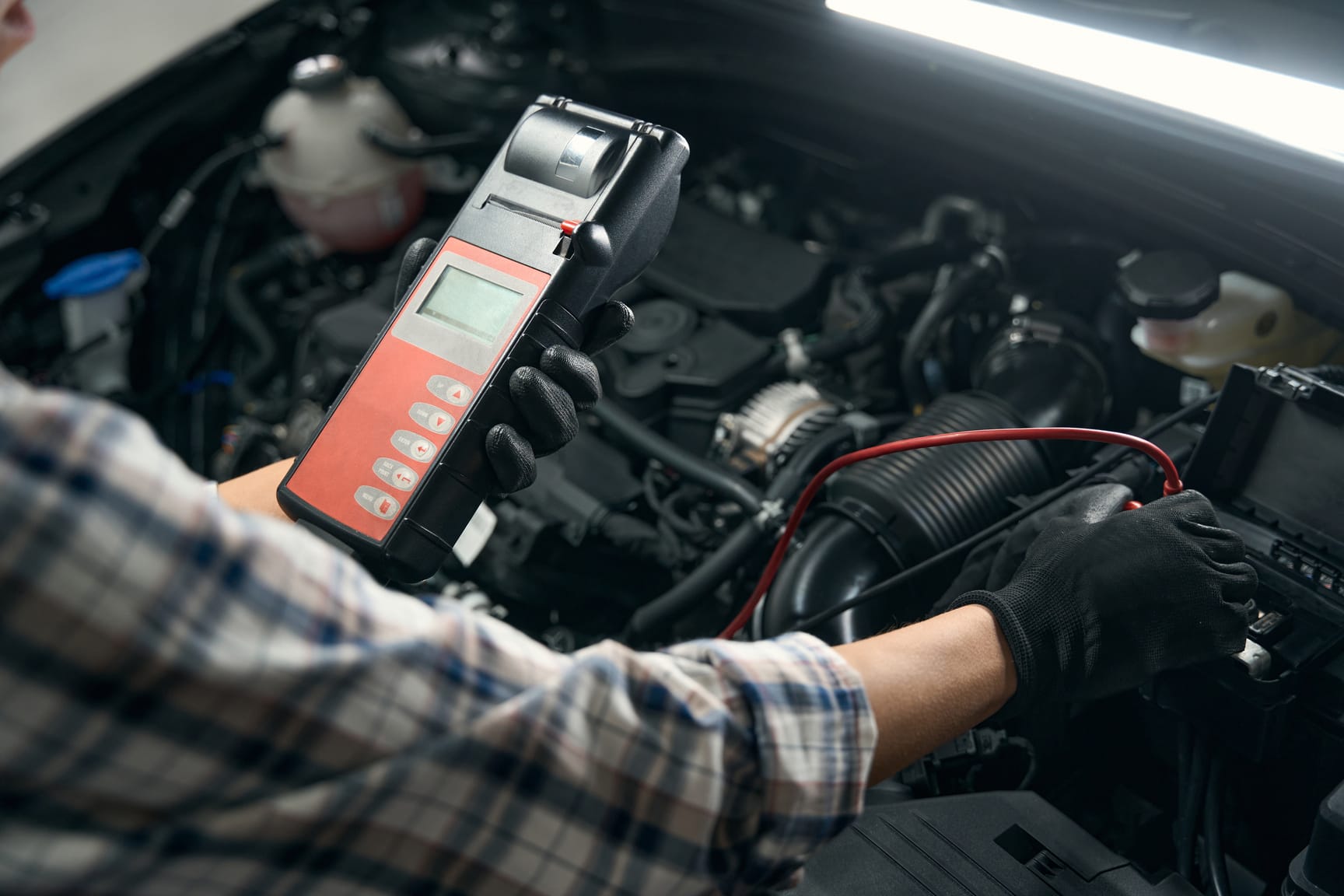
A battery test can show whether the battery itself is weak. If it repeatedly loses charge, the charging system or another electrical fault may also need to be checked, rather than simply fitting another battery.
The Starter Circuit May Not Be Receiving Power Correctly
A no-crank problem can occur even when the battery still has sufficient charge.
The starter motor needs a reliable electrical path from the battery and a signal telling it when to operate. A problem with the starter motor, solenoid, relay, fuse, wiring or electrical connections can interrupt that process.
Poor earth connections can also affect the high current needed during starting.
This is where electrical testing matters. Instead of replacing the starter because the engine will not turn over, a technician can check whether the correct voltage and signals are reaching the starting circuit.
The Key or Starting Signal Can Also Be Involved
Modern vehicles rely on more than a simple mechanical key connection before the engine can start.
Keys, immobiliser systems and electronic controls may form part of the starting process. If the vehicle does not recognise the key correctly or the required start signal is interrupted, the car may have normal dashboard power while the engine remains disabled.
A spare key may provide useful information if one is available and the vehicle manufacturer permits its normal use. Dashboard security or key-related warnings are also worth noting.
Try not to keep disconnecting the battery or resetting the electrical system unless you know the vehicle calls for it. It may not fix the problem and could wipe information that would otherwise help with diagnosis.
A Few Safe Observations Can Help Before the Electrician Arrives
Drivers can gather useful information without opening electrical components or attempting repairs.
Note whether the vehicle:
- cranks normally, slowly or not at all
- produces a click when starting is attempted
- has headlights and dashboard power
- shows a battery, security or other warning
- recently needed a jump start
- has had a battery, starter, key or accessory replaced
- developed the problem suddenly or gradually
If the vehicle is safely parked, it is usually better to leave electrical dismantling and circuit testing to the technician.
A car that will not start can also be inconvenient to move. A mobile auto electrician can test the battery, starter circuit, wiring, connections, and related electrical systems at the vehicle’s location before towing or parts replacement is considered.
Diagnose the No-Start Fault Before Replacing Parts
Having electrical power inside the car does not prove that the starting system is healthy.
A weak battery, starter circuit fault, poor connection, fuse, relay, wiring issue, or electronic starting problem can all cause a vehicle to appear electrically alive but not start. The exact behaviour of the car helps determine which areas need testing.
Julz Auto Electrix provides mobile auto electrical diagnostics and repairs across Melbourne’s western suburbs. If your car has power but will not start, the team can attend the vehicle’s location, test the relevant electrical systems and identify the appropriate repair where possible.