

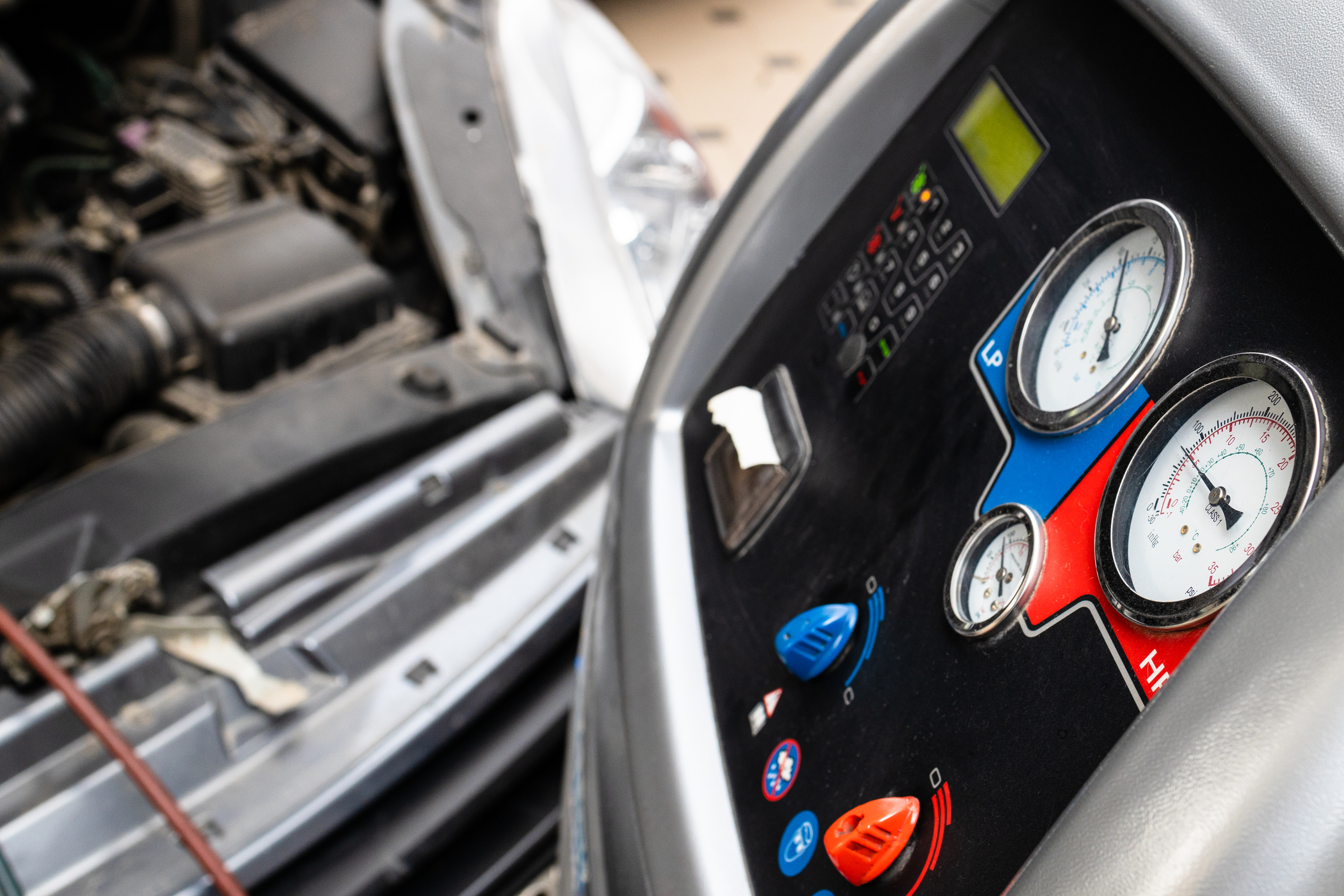
Your car’s air conditioning can still blow air through the vents even when the system is not cooling properly. While low refrigerant or a leak may be responsible, electrical faults can also prevent the compressor, cooling fans or temperature controls from operating as intended.
Modern vehicle air conditioning systems rely on sensors, wiring, relays and electronic control modules to manage cooling. If one of those fails, the system may well continue running without producing any cold air at all.
For drivers across Melbourne’s western suburbs, understanding the possible electrical causes can help determine why an air conditioning system needs further investigation before arranging a regas or replacing parts.
Why Can the Fan Work When the Air Conditioning Is Not Cooling?
The cabin blower and the air conditioning compressor perform different functions. The blower moves air through the dashboard vents, while the refrigeration system removes heat from that air.
This means the fan can operate normally even when the compressor is not running, or the system is unable to cool effectively.
In some vehicles, an electrical fault may interrupt the compressor’s power supply or prevent the control module from requesting cooling. Other systems use electronically controlled variable-displacement compressors, which can develop control faults without necessarily stopping the compressor.
The important distinction is that airflow alone does not confirm that the entire air conditioning system is working.
Electrical Problems That Can Affect Car Air Conditioning
Several electrical components influence how a vehicle’s cooling system operates. The exact arrangement varies between manufacturers, models and vehicle generations.
Faulty Fuses, Relays and Compressor Controls
Fuses and relays protect and control electrical circuits, including those associated with air conditioning.
A blown fuse may interrupt power to a compressor control circuit, cooling fan or another component. A faulty relay can also prevent a circuit from operating, even when the driver has selected the correct settings.
On vehicles fitted with an electromagnetic compressor clutch, a problem with the clutch circuit may prevent the compressor from engaging. However, not every vehicle uses this arrangement.
Replacing a blown fuse without identifying the cause of the failure may only provide a temporary solution, particularly if damaged wiring or excessive current caused the original problem.
Cooling Fan Motor or Control Faults
The condenser releases heat from the refrigerant, allowing the air conditioning system to cool the cabin.
Many vehicles rely on electrically operated radiator or condenser fans to maintain airflow when travelling slowly or sitting in traffic. If a fan motor, control module or associated wiring fails, heat may not be removed effectively.
A common symptom is air conditioning that feels reasonably cold while driving but becomes noticeably warmer when the vehicle stops.
However, the symptom does not automatically confirm a faulty fan. Refrigerant pressures, condenser condition, and other operating factors may also need to be checked.
Faulty Sensors and Pressure Switches
Air conditioning systems use temperature and pressure information to control operation and protect components from unsuitable operating conditions.
If a sensor sends incorrect information, the vehicle’s control module may reduce or disable compressor operation. Problems with sensor wiring or connectors can produce similar results.
For example, an incorrect refrigerant pressure signal may prevent the compressor from operating even when there is no mechanical fault with the compressor itself.
However, genuine low or high refrigerant pressure can also cause the system to shut down as designed. This is why electrical readings need to be assessed alongside the actual condition of the refrigeration system.
Damaged Wiring and Poor Electrical Connections
Vehicle wiring is exposed to vibration, heat, moisture and movement over time. These conditions can contribute to damaged insulation, corroded terminals or loose connections.
A poor connection may cause intermittent cooling, particularly when the vehicle travels over uneven roads or the engine compartment becomes hot.
The problem may disappear temporarily before returning, making it difficult to identify through a basic visual inspection.
Electrical testing can help establish whether the correct power supply, earth connection and control signals are reaching the relevant components.
Could the Dashboard Temperature Controls Be Responsible?
Not every cooling problem starts under the bonnet. The dashboard climate control system also determines how air is directed and how much heated or cooled air reaches the cabin.
Many modern vehicles use electric actuators to move internal air distribution and temperature blend doors.
If a blend door actuator becomes stuck or fails to respond correctly, warm air may mix with cooled air even when the temperature is set to its lowest level.
Possible signs include different temperatures coming from the driver’s and passenger’s vents, clicking noises behind the dashboard or little change when the temperature setting is adjusted.
These symptoms can overlap with other faults, so checking actuator operation and climate control commands is more useful than immediately replacing dashboard components.
How Are Electrical Air Conditioning Faults Diagnosed?
A proper diagnosis should establish whether the problem involves electrical control, refrigerant performance or a combination of faults.
An auto electrician may assess compressor operation, cooling fan activity, relevant fault codes, live sensor readings and electrical circuit conditions. Depending on the symptoms, refrigerant pressures and vent temperatures may also need to be measured.
This helps distinguish between components that are genuinely faulty and those being prevented from operating by another part of the system.
Drivers can also provide useful information without attempting electrical repairs themselves. Before booking an inspection, note whether:
- The air conditioning is always warm or only occasionally loses cooling.
- Cooling improves when the vehicle is moving.
- The fan speed changes normally.
- One side of the cabin feels warmer than the other.
- The problem appeared after electrical repairs, battery replacement or other vehicle work.
These observations can help narrow down the investigation.
Why Is Identifying the Electrical Fault Important?
Replacing a compressor, adding refrigerant or fitting a new sensor may not resolve poor cooling if an underlying electrical problem remains.
For example, a compressor that is not receiving the correct control signal may be mechanically sound. Similarly, a cooling fan that fails to operate may have a wiring or control problem rather than a failed motor.
Diagnosing the cause first can help avoid unnecessary component replacement and determine which repair is appropriate for the vehicle.
This is particularly relevant to newer vehicles, where air conditioning operation may depend on several interconnected electronic systems.
Need Help With an Electrical Air Conditioning Fault?
If your car’s air conditioning is running but not cooling properly, an electrical fault could be contributing to the problem.
Julz Auto Electrix provides mobile auto electrical services across Melbourne’s western suburbs, including Werribee, Hoppers Crossing, Altona and Williamstown.
For assistance with faulty cooling controls, wiring issues or poor air conditioning performance, enquire about our car air conditioning service and repair in Melbourne. Our team can assess the relevant components and help identify the next steps for your vehicle.